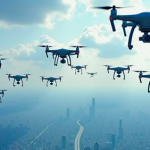
In the Russia–Ukraine conflict, unmanned aerial vehicles (UAVs) have become a routine strike weapon. Due to their low cost, ease of assembly, compact size, and strong ability to penetrate urban security and surveillance systems, small UAVs are particularly difficult to detect during ultra-low-altitude flight in densely populated airspace. As a result, Ukraine, facing shortages of conventional weapons and ammunition, adopted integrated tactics combining unmanned surface vessels (USVs) and UAVs. These tactics caused significant damage to Russian power plants, oil refineries, and even strategic assets such as bombers and airborne early warning aircraft parked at airfields, dealing a heavy blow to Russia’s Black Sea Fleet.
At the same time, Ukrainian forces increasingly employed FPV drones to attack Russian armored vehicles and defensive fortifications. Russia, in turn, has frequently used UAVs—including swarm operations—to strike Ukraine’s energy infrastructure and military-industrial facilities, achieving immediate and visible destructive effects.
Passive Counter-UAS Defense
Passive defense measures in counter-UAS (CUAS) missions involve a range of methods designed to avoid detection, targeting, and to mitigate the effects of UAV attacks. Many of these measures resemble techniques used during World War I to counter aerial threats, which remain effective today against manned aircraft, cruise missiles, ballistic missiles, and UAVs. Passive CUAS measures include camouflage, concealment, and deception (CCD), force dispersion, and hardening or sheltering.
Camouflage, Concealment, and Deception (CCD)
CCD aims to make friendly assets harder for small unmanned aircraft systems (SUAS) to detect and identify using onboard sensors. A thorough understanding of enemy UAV capabilities is essential for effective CCD planning, which must also consider the operational environment. In sparsely populated areas, distinguishing ground forces from UAV systems can already be challenging; in urban environments crowded with vehicles, civilians, and radio-frequency emitters, the challenge is even greater.
To prevent the exposure of high-value assets, obscurants such as smoke or decoys can be used to interfere with the optical sensors of enemy UAVs. Decoys can also reduce the effectiveness of UAV attacks by forcing the enemy to expend weapons on low-value targets. Since the outbreak of the conflict, decoys have been a core element of Ukraine’s counter-UAS strategy. For example, Ukraine used wooden decoys of the HIMARS multiple launch rocket system to deceive Russian UAVs and successfully attract enemy fire. Inflatable decoys capable of simulating armored vehicles have also proven effective. Inflatable “Leopard” tank decoys even incorporate heat- and radar-emitting components to better replicate the multispectral signatures of real tanks.
Force Dispersion
Force dispersion improves battlefield survivability by reducing the overall signature of friendly forces and limiting losses when a specific location is attacked. This strategy has proven particularly effective against reconnaissance systems that guide artillery to conduct large-scale strikes using unguided or cluster munitions.
However, dispersion is less effective against large numbers of loitering munitions capable of independently or autonomously selecting targets. In such cases, dispersion may even be counterproductive, as dispersed units struggle to concentrate limited counter-UAS resources to repel attacks. While dispersion enhances survivability against most aerial threats, it may complicate the implementation of active CUAS measures due to the lack of concentrated defensive capabilities.
Hardening and Sheltering
Hardening and sheltering reduce the damage caused by air-delivered munitions. Since small UAVs have limited payload capacity, physical reinforcement can significantly improve survivability. Common measures include installing metal cages or barriers on armored vehicles—a practice widely observed among Ukrainian, Russian, and Israeli forces.
For fixed sites, hardening involves protecting storage or parking areas for high-value military assets by constructing dedicated shelters or reinforcing existing structures. These measures ensure that critical assets remain operational even under attack, thereby maintaining operational continuity and combat effectiveness.
Active Counter-UAS Defense
The growing threat posed by UAVs has driven rapid global expansion of the counter-UAS market. By March 2021, research indicated that 581 counter-UAS products were produced by 282 manufacturers across 39 countries.
Active counter-UAS methods target vulnerabilities within UAV systems. A remotely piloted UAV system typically includes an operator, control station, aircraft, communication links, and payloads. Autonomous UAVs may not require operators or external communications during flight, but still rely on onboard data processors. Understanding these components is critical to developing effective countermeasures.
Detection and Identification Challenges
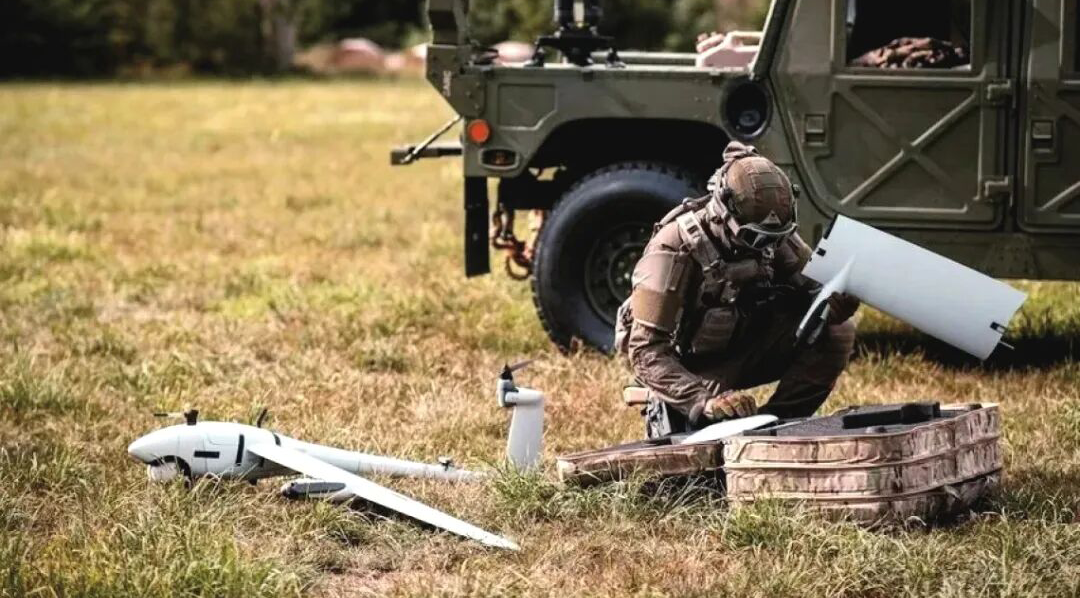
Detecting small UAVs is inherently difficult. Their small size results in minimal signatures both in flight and on the ground. They can fly close to terrain or tree lines, using natural cover to remain concealed. Additional signature-reduction techniques include flying into the wind to reduce acoustic output and exploiting sunlight or cloud cover.
Locating UAV operators and control stations is equally challenging, as they are often physically separated from the aircraft. While early UAVs used narrowband communications that were relatively easy to detect, modern systems employ spread-spectrum technologies, making interception and jamming more difficult. Emerging communication methods, such as 5G cellular networks and commercial satellite broadband, further complicate detection. Military-grade UAVs like the Orlan-10 use hardened data links that are highly resistant to interception and jamming.
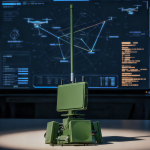
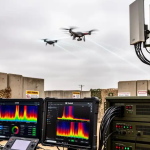
Once a suspected UAV threat is detected, it must be identified to determine its origin, type, intent, and other actionable information. A decision is then made to target a specific system component—operator, control station, communication link, or aircraft—using an appropriate effector. In ad hoc defenses, a single soldier may act as sensor, decision-maker, and effector simultaneously. In more integrated systems, multiple sensors feed data into centralized decision-making processes involving humans, computers, or both.
Engagement Methods
The engagement phase focuses on defeating the UAV or its payload using kinetic and non-kinetic effectors, including directed-energy weapons, electronic jamming and deception, anti-aircraft guns, missiles, nets, and interceptor or suicide drones. Regardless of the method, collateral effects on the environment and friendly forces must be carefully considered.
Innovative Counter-UAS Tactics in the Russia–Ukraine Conflict
1. Acoustic Detection Systems
Acoustic systems use microphones to detect UAV noise, typically generated by engines and propellers within the 20–20,000 Hz range. Each UAV model produces a unique acoustic signature that can be matched against a database. These passive sensors do not emit signals and can locate UAVs using time-difference-of-arrival techniques with GPS-level accuracy.
However, detection range is limited, decreasing by 6 dB each time distance doubles. Effective ranges vary from 5 to 600 meters. Acoustic systems struggle in noisy environments and adverse weather, and UAV noise-reduction technologies further limit their effectiveness.
2. Light and Heavy Machine Guns
Ukraine developed the cloud-based “Delta” distributed combat system, enabling civilians and soldiers to report UAV sightings via smartphones. This data is integrated into military command systems and used to cue machine-gun teams. Due to their low altitude and slow speed, small UAVs are vulnerable to anti-aircraft machine-gun fire.
3. Integrated Operational Systems
Following the 2019 drone and cruise missile attack on Saudi oil facilities, the U.S. developed enhanced counter-swarm systems such as the Coyote interceptor UAV paired with Ku-band radar. In exercises, Coyote drones equipped with directed-energy systems successfully intercepted swarms of up to ten UAVs.
Russia is reportedly upgrading its ROSC-1 counter-UAS system, combining electronic suppression with interceptor drones like the “Wolf-18.”
4. Portable Soldier-Carried Systems
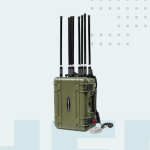
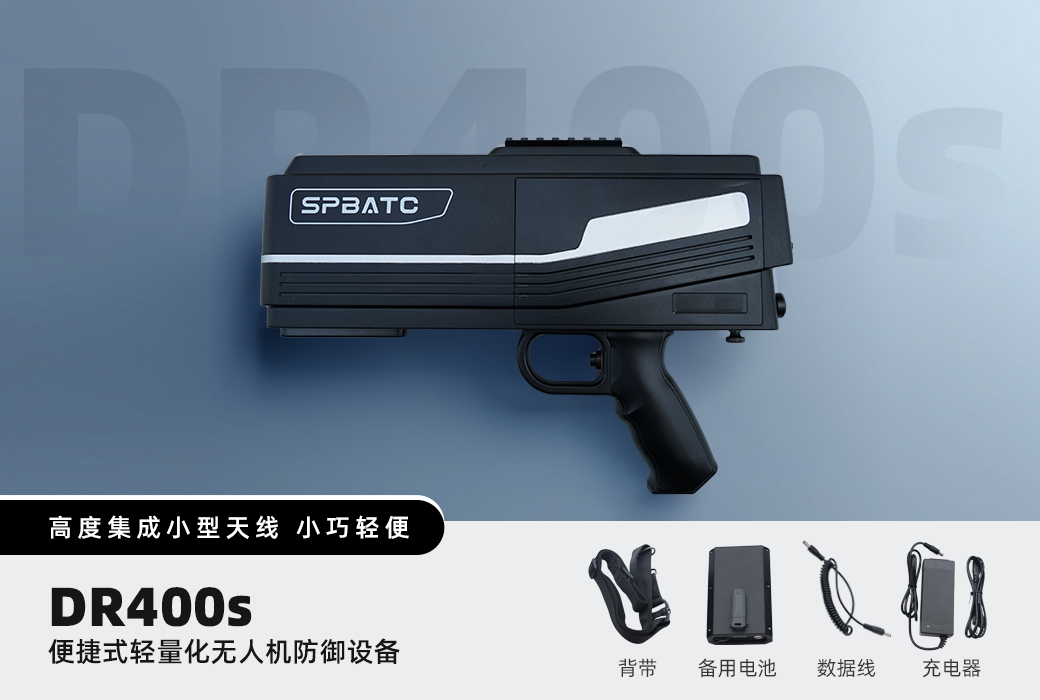
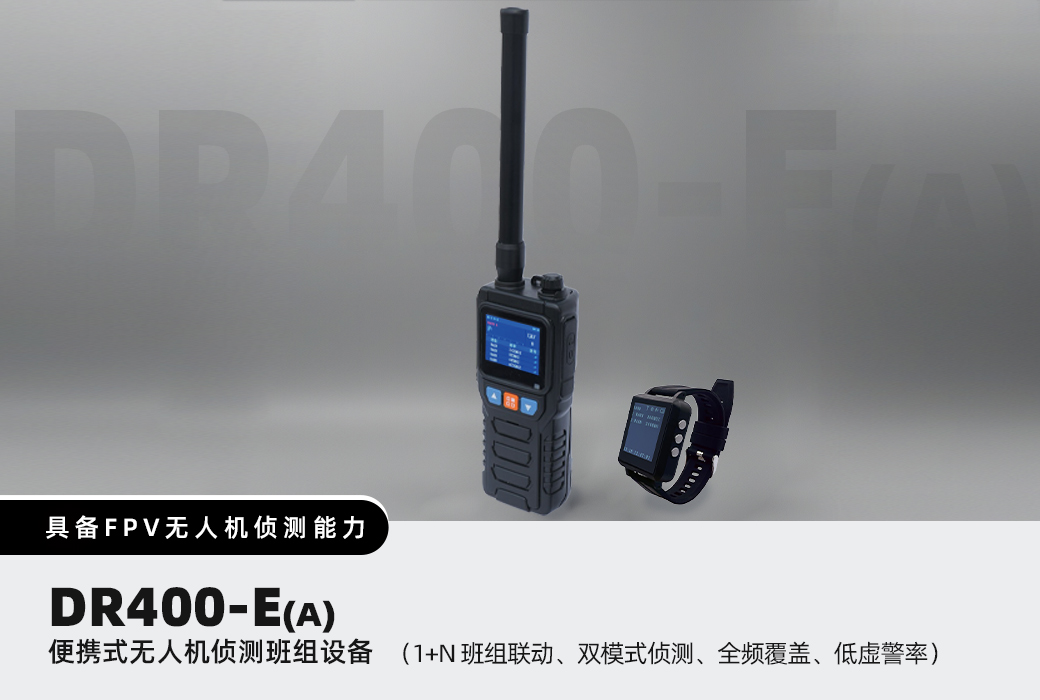
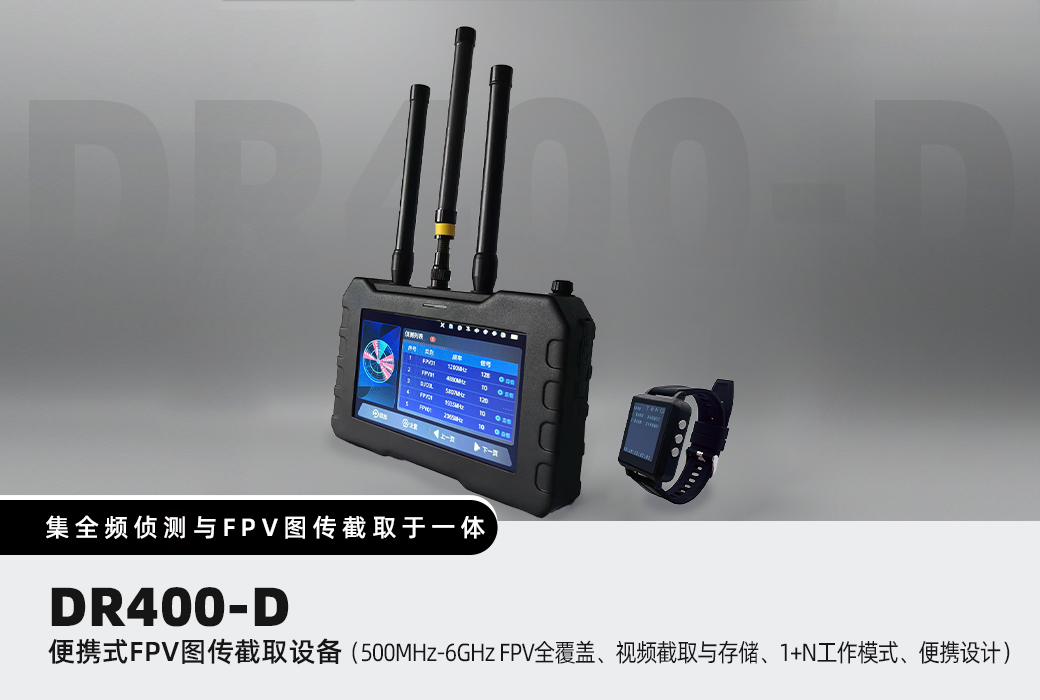
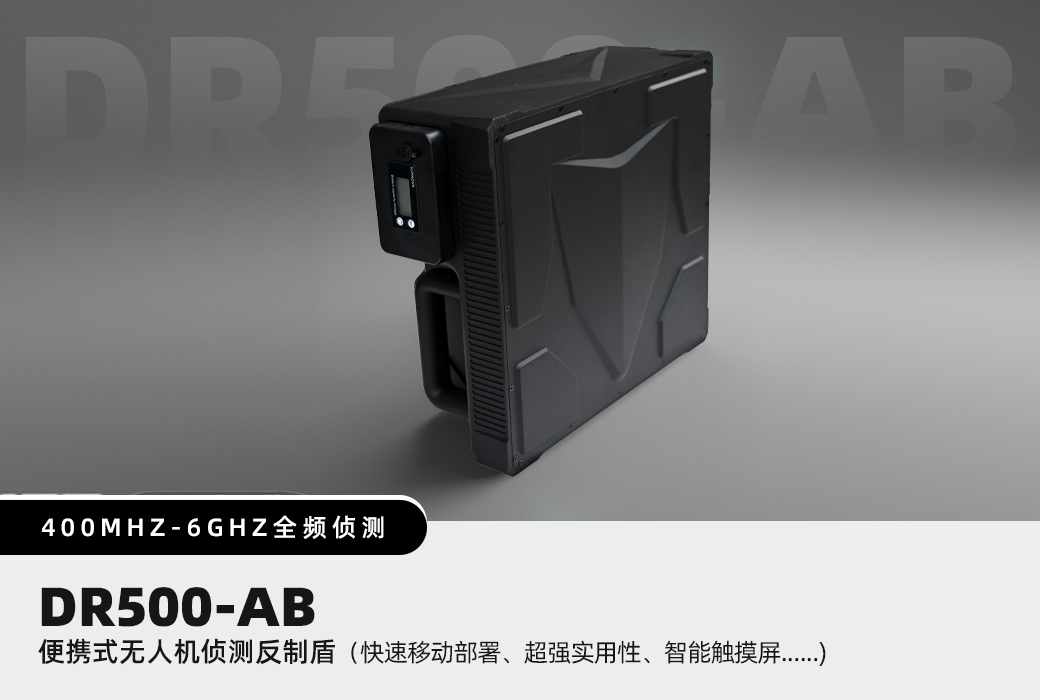
Ukraine deployed “drone hunter” rifles capable of forcing UAVs to land via electronic suppression. Russia introduced compact systems such as the K-1000 FPV dome-suppression electronic warfare suitcase, capable of neutralizing multiple UAVs within a 250-meter radius.
5. Specialized Anti-Drone Ammunition
Russian researchers developed 57-mm shells that generate electromagnetic pulses to disable UAV electronics, combined with fragmentation effects to destroy multiple targets.
6. Laser Weapons
Russia has fielded combat laser systems such as the Peresvet, capable of countering UAVs, optical sensors, and even missiles. Additional classified laser projects are reportedly under development.
7. “Aerial Minefields”
Methods include tethered balloons, steel cables, smoke, and airborne nets to obstruct UAV flight paths. Russia also developed low-cost net-carrying drones to physically capture enemy UAVs.
8. Electronic Warfare
Electronic jamming targets UAV communication links and navigation systems, causing loss of control or crashes. Russia has deployed systems such as Krasukha-4S and tank-mounted electronic countermeasures to protect armored units.
9. Communication Networks and Apps
Russia’s “People’s Front Radar” mobile app enables civilians to report UAV sightings, significantly improving response speed. Ukraine has observed Russian UAVs using local SIM cards and adapting flight profiles to evade defenses.
10. UAV-on-UAV Combat
Interceptor UAVs can jam, collide with, or destroy incoming UAVs. Russia has employed Lancet loitering munitions and even armed UAVs equipped with automatic shotguns for area suppression against drone swarms.
Conclusion
Future warfare will increasingly feature high-altitude, high-speed, stealthy, long-endurance, miniaturized, intelligent, and swarm-based UAVs, making counter-UAS capabilities a decisive factor on the modern battlefield.