Countering High-Speed Threats: The Critical Role of FPV Drone Jammers
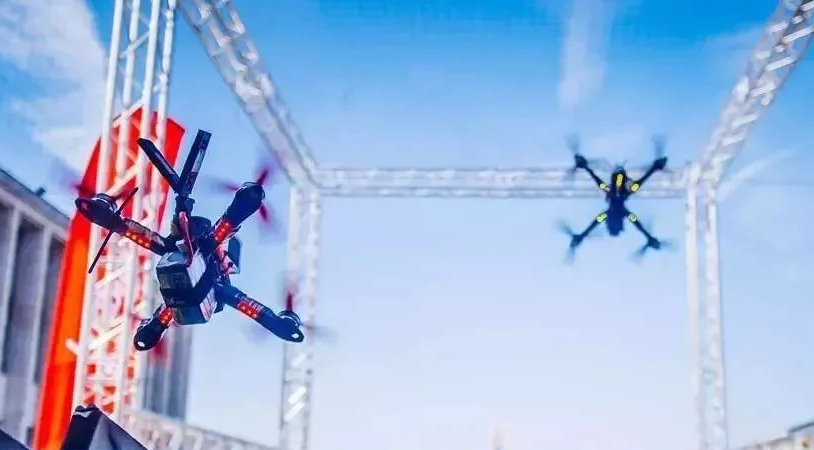
The evolution of drone warfare and unauthorized surveillance has taken a sharp turn with the rise of FPV (First Person View) drones. Unlike standard commercial UAVs that rely on GPS waypoints and stable hovering, FPV drones are manual, high-speed, and incredibly agile. Because they are often used as “kamikaze” or racing drones, traditional security measures often fail. This has led to the urgent development of dedicated FPV drone jammers.
Why FPV Drones are Harder to Stop
To understand why a specialized FPV drone jammer is necessary, one must look at how these aircraft operate:
-
Low Latency Links: They use high-speed analog or digital video links (typically 1.2GHz or 5.8GHz) to give the pilot a real-time view.
-
Manual Control: Many FPV pilots use “Non-GPS” modes. If you jam the GPS, the drone doesn’t stop; the pilot simply continues flying manually.
-
Frequency Hopping: Modern FPV systems like ELRS (ExpressLRS) and Crossfire operate on 868/915MHz with rapid frequency hopping, making them highly resistant to narrow-band interference.
Key Features of an Effective FPV Drone Jammer
A standard jammer might miss the specific frequencies used by racing and tactical FPV quads. An effective FPV-specific solution must include:
1. Wide-Spectrum Coverage
FPV drones operate across a variety of non-standard bands. A robust jammer must cover:
-
Control Links: 433MHz, 868MHz, 915MHz, and the standard 2.4GHz.
-
Video Transmission: 1.2GHz (common for long-range), 2.4GHz, and 5.8GHz.
2. High Power Output
Because FPV drones move at speeds exceeding 100 km/h, the “reaction window” for security personnel is extremely small. A 50W or 100W module is often required to ensure the signal disruption happens far enough away to prevent the drone’s momentum from carrying it into the target.
3. Circularly Polarized Antennas
Most FPV drones use circular polarization (LHCP/RHCP) for their video feeds to minimize multipath interference. To effectively “wash out” the pilot’s goggles, the jammer should ideally use matching antenna polarization to maximize the interference efficiency.
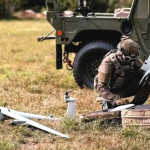
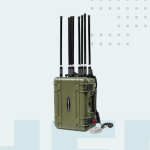
[Image: Tactical backpack-style FPV jammer deployed in a field]
What Happens to an FPV Drone When Jammed?
When a high-speed FPV drone enters a jamming zone, the pilot experiences “snow” or a total blackout in their goggles. Since these drones are often flown in “Acro Mode” (manual stabilization), losing the video feed for even two seconds usually results in the drone losing orientation and crashing. This instant kinetic denial is the primary goal of an FPV drone jammer.
Applications in Modern Security
-
Military & Defense: Protecting convoys from low-cost loitering munitions.
-
Event Protection: Preventing high-speed drones from entering stadiums or outdoor rallies where they could pose a physical threat.
-
Prison Security: Stopping the high-speed delivery of contraband over perimeter walls.
Conclusion
As FPV technology becomes more accessible, the threat profile for security teams changes. Investing in a dedicated FPV drone jammer is no longer optional for high-risk environments. By targeting the specific low-latency control and video frequencies these drones rely on, security forces can effectively neutralize even the fastest aerial threats.